



Best Tactical Shirts for Duty: A Buyer's Guide
Table of Contents
- What Makes a Tactical Shirt Mission-Ready
- Combat vs. Duty Shirt Differences
- How to Choose a Combat Shirt for Your Role
- Tactical Shirt Features for Law Enforcement
- Best Flame Resistant Tactical Shirts
- Top Tactical Shirt Recommendations
- Key Factors: Fit, Durability, and Duty-Belt Compatibility
- Frequently Asked Questions
What Makes a Tactical Shirt Mission-Ready
A mission-ready tactical shirt is engineered equipment designed to perform under operational stress: extended wear, heavy load-bearing, rapid movement, and environmental extremes. The best tactical shirts combine three core elements: fabric technology that manages moisture and breathability, construction methods that withstand abrasion and repeated stress, and design features that integrate seamlessly with duty belts, body armor, and tactical gear.
At Rogue American, we engineer tactical shirts with operational realities in mind. Our poly-cotton blends and tri-blend fabrics maintain structural integrity through wash cycles, resist tearing at stress points, and regulate temperature across variable conditions.

Combat vs. Duty Shirt Differences
Combat shirts and duty shirts serve related but distinct purposes.
A combat shirt is designed for direct engagement environments, military field operations, and high-threat scenarios. Combat shirts typically feature gusseted underarms for articulated elbow movement, reinforced stitching at stress points, and often include flame-resistant properties. The fit is intentionally loose to accommodate body armor and layering.
A duty shirt is built for sustained professional wear in law enforcement, security, and first responder contexts. Duty shirts balance tactical functionality with professional appearance standards. They work under a duty belt for 8-12 hour shifts, conceal equipment without printing, and maintain uniform-compliant appearance while allowing adequate range of motion for equipment access and physical intervention.
For law enforcement and security professionals, a duty-focused tactical shirt typically outperforms a pure combat design. The fit works better under a duty belt without excess fabric bunching, and the fabric weight balances breathability with durability.
How to Choose a Combat Shirt for Your Role
Selecting the right tactical shirt for duty starts with understanding your operational context, then matching specific features to that context.
Define Your Primary Use Case
Are you wearing this shirt for daily duty shifts, tactical training, or occasional high-threat scenarios? Duty-focused professionals need superior duty-belt compatibility and professional appearance; tactical operators prioritize articulated movement and abrasion resistance.
Assess Fabric Requirements
Poly-cotton blends (typically 60/40 or 65/35) offer the best balance of durability, moisture management, and cost-effectiveness for most duty applications. Tri-blend fabrics add softness and improve breathability but can be less durable under heavy equipment loads. If you're operating in high-heat environments or wearing body armor for extended periods, prioritize breathability. If durability under repeated duty-belt wear is your primary concern, a heavier poly-cotton blend will outlast lighter alternatives.
Evaluate Fit and Range of Motion
Look for gusseted underarms and articulated elbows, which allow full range of motion without the shirt riding up or bunching under equipment. The fit should be snug enough to prevent printing under a duty belt but loose enough to layer over base layers or under body armor without binding.
Check Duty-Belt Compatibility The fabric should resist snagging on hook-and-loop fasteners and belt hardware. Seams at the sides and underarms need reinforced stitching to handle the friction and stress of daily belt wear. Test the shirt's behavior when cinched with a loaded belt: does it ride up? Does excess fabric bunch at the sides?
Consider Concealment and Professional Appearance
If your role requires uniform compliance or public-facing interaction, the shirt needs to work within professional standards. Solid colors and minimal graphics work better than bold designs for duty environments.
Tactical Shirt Features for Law Enforcement
Law enforcement professionals have specific equipment integration needs that distinguish their requirements from military or extreme sports users.
Reinforced Stitching and Stress-Point Construction
Law enforcement duty involves repetitive movements, reaching for equipment, and physical intervention. Double-stitched seams and reinforced stress points at shoulders, underarms, and sides extend shirt lifespan.
Hook-and-Loop Compatibility
Many law enforcement uniforms integrate hook-and-loop fasteners for patches or rank insignia. A tactical shirt's fabric needs to resist snagging and deterioration when in contact with these materials. Smooth, tightly-woven fabrics resist this better than loose weaves or fuzzy tri-blends.
Load-Bearing Design
A duty belt carries significant weight, holster, ammunition, radio, keys, flashlight, and other equipment can total 10-15 pounds (nij.gov). The shirt fabric and fit need to support this load without distortion. Poly-cotton blends with good recovery handle this better than softer tri-blends.
Thermal Regulation for Extended Wear
Law enforcement officers wear tactical shirts for entire shifts in mixed environments. The shirt needs to manage moisture-wicking effectively across varied conditions. A balanced approach, moderate moisture-wicking with good thermal properties, works better for sustained duty wear than extreme performance in one direction.
Professional Appearance and Uniform Compliance
Law enforcement duty often involves public interaction. The shirt needs to look professional enough for briefings and community engagement while maintaining tactical functionality. Solid colors, minimal graphics, and tailored fit achieve this better than bold designs or oversized cuts.
Best Flame Resistant Tactical Shirts
Flame-resistant tactical shirts serve a specific, critical function: protecting against flash and sustained heat exposure in high-threat environments.
Understanding Flame-Resistant Standards
Flame-resistant (FR) fabrics are treated or engineered to self-extinguish when exposed to flame, slowing burn rate and limiting heat transfer to skin (peer-reviewed research). The most common standards for tactical apparel are NFPA 70E (electrical hazard protection) and military specifications like MIL-SPEC (nfpa.org).
When Flame Resistance Matters
FR tactical shirts are essential for explosive ordnance disposal (EOD) teams, tactical breach operations in structures with fire hazard, and high-threat security details in environments with incendiary risk. For routine patrol or administrative duty, standard tactical shirts offer adequate protection with superior comfort and durability.
Performance Trade-offs
FR fabrics tend to be heavier, less breathable, and more prone to moisture retention than standard poly-cotton blends. Extended wear in heat becomes uncomfortable quickly. Many FR treatments degrade with standard washing, requiring specialized detergents or dry cleaning.
Real-World Durability Considerations
FR treatments can degrade with repeated washing and sunlight exposure. Check the manufacturer's care instructions carefully, as some FR shirts lose their rating after a certain number of wash cycles or if treated with standard detergent.
Top Tactical Shirt Recommendations
The following tactical shirts represent the best options for duty professionals, balancing durability, functionality, and real-world performance across different operational contexts.
1. Boogieman Shirt: Durable Poly-Cotton Blend
The Boogieman Shirt from Rogue American delivers core functionality law enforcement and security professionals need. Built from a 60/40 poly-cotton blend, this shirt prioritizes durability and comfort for extended duty wear.
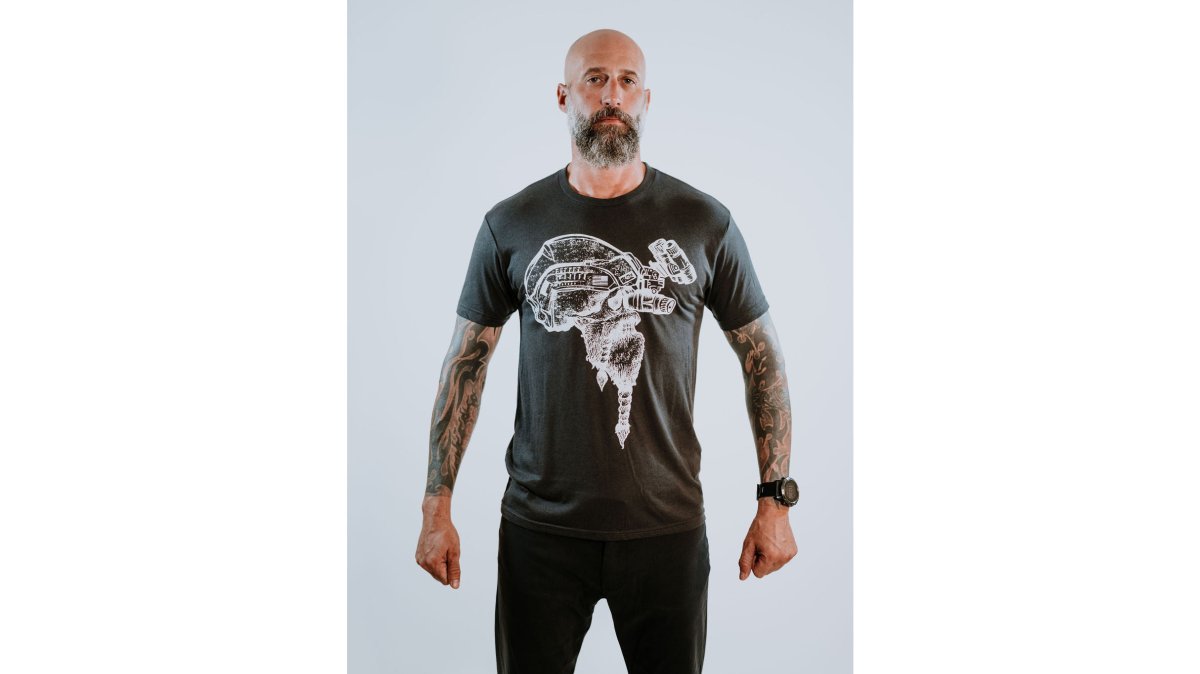
The poly-cotton construction resists snagging on hook-and-loop fasteners and duty-belt hardware better than softer alternatives. Preshrunk for consistent fit after washing, the Boogieman maintains its shape through repeated wash cycles. Reinforced stitching at stress points handles the friction and stress of daily belt wear without premature failure.
The black colorway meets uniform compliance standards for most agencies while maintaining professional appearance. The fit is tailored enough for public-facing interaction but allows adequate range of motion under gear. At $29.99, the Boogieman offers exceptional value for duty professionals.
Pros:
- Proven poly-cotton blend for duty wear durability
- Preshrunk fabric maintains fit through repeated washing
- Reinforced stitching at stress points for extended belt wear
- Professional appearance suitable for uniform compliance
- Exceptional value at the price point
Cons:
- Less breathable than tri-blend alternatives in high-heat environments
- Black color shows wear and dust more visibly than earth tones
- Standard fit may require sizing adjustment for athletes with larger shoulder mass
2. Death Dealers Ace of Spades Shirt: Ripstop Construction
The Death Dealers Ace of Spades Shirt prioritizes abrasion resistance and tactical functionality. Built from high-quality poly-cotton tri-blend fabric with ripstop reinforcement, this shirt excels in demanding operational environments where durability under extreme conditions matters most.
The ripstop weave adds structural integrity without significantly increasing weight, preventing small tears from spreading, a critical feature for professionals operating in rough terrain or around sharp equipment. The olive color works across multiple operational contexts. The preshrunk fabric maintains consistent fit, and the tri-blend composition improves breathability compared to heavier poly-cotton alternatives. At $29.99, the price matches the Boogieman.
Pros:
- Ripstop construction prevents tear propagation in abrasion-heavy use
- Tri-blend fabric improves breathability without sacrificing durability
- Olive color provides tactical versatility across environments
- Reinforced stitching and stress-point construction
- Strong appeal within operational community
Cons:
- Ripstop weave can snag on certain hook-and-loop fasteners if fit is too tight
- Tri-blend fabric shows wear patterns differently than solid poly-cotton
- Olive color may not meet all agency uniform standards
3. Midnight Scalper Shirt: Breathable Tri-Blend
The Midnight Scalper Shirt from Rogue American prioritizes comfort and breathability for professionals operating in high-heat environments or wearing extended body armor. The tri-blend construction delivers the softest feel while maintaining functional durability for tactical applications.

The breathable tri-blend fabric excels in sustained heat exposure, critical for summer patrol, outdoor training, or professionals wearing body armor for extended periods. The preshrunk construction ensures consistent fit, and reinforced stitching handles duty-belt wear effectively. At $29.99, the price point remains competitive while delivering distinct performance characteristics.
Pros:
- Breathable tri-blend construction for heat management
- Softest feel of the three options for extended comfort
- Preshrunk fabric maintains fit through repeated washing
- Reinforced stitching handles duty-belt wear
- Excellent for warm-climate or body-armor applications
Cons:
- Slightly less durable under extreme abrasion than poly-cotton alternatives
- Tri-blend fabric may show pilling after extended wear
- Requires careful washing to maintain softness
Key Factors: Fit, Durability, and Duty-Belt Compatibility
Beyond fabric choice and construction, three factors determine whether a tactical shirt succeeds or fails in real duty use: how it fits your frame, how long it lasts under operational stress, and how it integrates with your duty belt and equipment.
Fit and Range of Motion
A tactical shirt's fit directly impacts functionality and comfort. The shirt needs to be snug enough to prevent printing under a duty belt but loose enough to allow full range of motion without binding. Gusseted underarms and articulated elbows are essential features. Test fit by simulating duty movements: reaching overhead, bending at the waist, turning with a loaded belt. The shirt should move with you, not against you.
Long-Term Durability Testing
Real durability emerges over months and years of use. Look for evidence of how shirts perform through repeated wash cycles and extended duty wear. Reinforced stitching at stress points, quality fabric with good recovery properties, and proven construction methods separate durable shirts from those that fail within weeks.
| Factor | Impact on Durability | What to Look For |
|---|---|---|
| Fabric Weight | Heavier resists abrasion longer but may reduce breathability | 5.5-6.5 oz for duty wear |
| Stitching | Determines seam failure point under stress | Double-stitched at shoulders and underarms |
| Preshrinking | Ensures consistent fit after repeated washing | Stated in product specifications |
| Fabric Recovery | How well fabric returns to shape after stretching | Poly-cotton blends recover better than tri-blends |
| Stress-Point Reinforcement | Prevents failure at high-wear areas | Reinforced shoulders, underarms, sides |
Duty-Belt Compatibility
Test compatibility by wearing the shirt with your loaded duty belt for at least an hour. Watch for these issues: Does the shirt ride up when you sit? Does excess fabric bunch at the sides? Does the belt hardware snag the fabric? Does the shirt maintain its shape as the belt settles throughout the shift?
The fabric needs to resist snagging on hook-and-loop fasteners and metal hardware. Smooth, tightly-woven fabrics handle this better than loose weaves. Seams at the sides need reinforcement to withstand the friction of belt wear.
Choosing the best tactical shirt for duty means matching specific features to your operational context rather than buying the most heavily marketed option. The Boogieman Shirt, Death Dealers Ace of Spades, and Midnight Scalper each excel in different scenarios: durability-focused duty wear, abrasion-intensive operations, and heat-management applications, respectively. All three deliver the reinforced construction, proven fabric choices, and duty-belt compatibility that separate mission-ready apparel from marketing-driven gear. Start with your primary use case, then match the shirt that addresses your specific operational needs.

Frequently Asked Questions
Q: What features should I look for in a duty tactical shirt?
A: Prioritize moisture-wicking fabric, reinforced stitching at stress points, and gusseted underarms for range of motion. Ripstop material resists tears during high-stress operations. Look for a fit that works under your duty belt without printing or riding up. Poly-cotton blends offer durability and breathability, while articulated elbows provide ergonomic design for tactical functionality.
Q: How do I choose a combat shirt that works under my uniform?
A: Select a combat shirt with a tailored athletic fit that won't bunch under body armor or duty belts. Ensure the fabric is thin enough to layer without adding bulk but durable enough to withstand abrasion. Test the shirt's length, it should stay tucked during movement. Verify that pocket placement doesn't interfere with your load-bearing equipment. Many operators prefer tri-blend fabrics for their balance of comfort and thermal regulation across different climates.
Q: Are flame-resistant tactical shirts necessary for duty?
A: Flame-resistant shirts aren't mandatory for all roles, but they're essential for tactical operators working near fuel, explosives, or in high-heat environments. Law enforcement, military combat roles, and security professionals in hazardous settings should prioritize FR-rated options. Standard poly-cotton tactical shirts offer excellent durability and breathability but lack flame protection. Check your agency's uniform compliance requirements, many departments now recommend or require FR-rated apparel for certain assignments.
Q: How long do quality tactical shirts last with regular use?
A: High-quality tactical shirts with reinforced stitching and ripstop construction can offer extended durability. Poly-cotton tri-blend fabrics can maintain their shape and color. Proper care extends durability: machine wash in cold water, hang dry or use low heat. Avoid bleach and fabric softener, which can degrade moisture-wicking properties. Mission-ready apparel from veteran-owned brands is engineered for extended duty cycles in demanding environments.