



Durable Tactical Pants for Daily Use: 2026 Guide
Table of Contents
- What Makes Durable Tactical Pants Worth Wearing Every Day
- Tactical Pants with Stretch: Mobility Without Sacrificing Structure
- Best Tactical Pants for Work: Top Picks Compared
- Low-Profile Aesthetics: Tactical Performance Without the Costume Look
- Long-Term Wear and Repairability: What Holds Up After Real Use
- How to Choose Tactical Pants That Actually Fit Your Mission
- Frequently Asked Questions
Last Updated: September 1, 2026
Tactical pants are one of those purchases where the wrong choice costs you twice: once at checkout, and again when the seams blow out three months into real use. At Rogue American, we've spent considerable time evaluating what separates genuinely durable tactical pants for daily use from gear that looks the part but fails under pressure. This guide breaks down the construction details, fit considerations, and top picks that hold up across 12-hour shifts, range days, and everything in between.
What Makes Durable Tactical Pants Worth Wearing Every Day
Durable tactical pants are purpose-built trousers engineered for high-stress daily use, combining abrasion-resistant fabrics, reinforced construction, and functional storage in a design that holds its shape through repeated wear and washing.
Fabric composition tells you most of what you need to know. Poly-cotton blends in the 65/35 range (polyester to cotton) remain the industry standard: polyester contributes tensile strength and shape retention, while cotton adds breathability and comfort. The best options layer ripstop weave over that blend, creating a grid pattern that stops tears from propagating.
Fabric and Tensile Strength: Ripstop, Poly-Cotton, and Beyond
Ripstop fabric is a reinforced weave pattern where heavier threads are interwoven at regular intervals, preventing small tears from spreading. For tactical pants, this matters most at high-stress points: the knees, the seat, and the inner thigh.
The KÜHL Renegade Cargo Pants use DURALUX softshell fabric (95% nylon, 5% spandex) rather than poly-cotton ripstop (peer-reviewed research). Nylon-dominant fabrics offer superior abrasion resistance and shed moisture faster, making them strong contenders for outdoor-heavy use. The tradeoff is breathability: in hot, humid conditions, nylon runs warmer than cotton-forward blends.
Spandex integration changes the wearing experience significantly. Options like the CQR Men's Flex Ripstop Tactical Pants blend 63% polyester, 34% cotton, and 3% spandex, adding four-way stretch without sacrificing structural integrity.
Reinforced Stress Points and Heavy-Duty Stitching
Quality construction means triple stitching at stress points: the crotch seam, belt loop attachment, and pocket corners. The Pentagon Rogue Hero Pants explicitly use triple stitching on stress points, which is essential for any pant claiming durability under real use.
Belt loops deserve specific attention for anyone carrying a duty belt. Reinforced belt loops, like the 1.5-inch loops with 2.5-inch wide openings on the Tru-Spec 24-7 Series, are built to handle the weight of a loaded duty rig without deforming or tearing free. For law enforcement and security professionals, this is non-negotiable.
Tactical Pants with Stretch: Mobility Without Sacrificing Structure
The best tactical pants with stretch feel like athletic wear when you move and structured trousers when you stand still. Four-way stretch fabrics accomplish this through mechanical stretch (built into the weave itself) or elastane integration (spandex blended into the yarn). Mechanical stretch, like the Flex-Tac ripstop used in the 5.11 Tactical Men's Stryke Pants, provides stretch without the eventual sag that elastane-heavy fabrics develop after repeated washing.
Articulated Knees and Gusseted Crotch
An articulated knee is a pre-shaped knee panel that follows the natural bend of the leg. When you kneel or climb, the fabric moves with you instead of pulling from the waistband. Most quality tactical pants include this feature.
A gusseted crotch is a diamond-shaped fabric insert sewn into the crotch seam. Without it, the crotch seam bears full stress during every lunge, high step, or sprint. With it, that stress distributes across a larger fabric area, dramatically extending seam life. The Pentagon Rogue Hero Pants call theirs a "diamond crotch", same concept, different terminology.
Waistband Comfort for 12-Hour Shifts
A rigid waistband that digs in after four hours is a dealbreaker for anyone pulling a full shift. The 5.11 Stryke uses a self-adjusting tunnel waistband. Tru-Spec's 24-7 Series uses a comfort-fit slider waistband specifically designed for inside-the-waistband carry. The Vertx Phantom LT 2.0 incorporates a side stretch waistband with a higher rise in the back, addressing the gap that appears at the small of the back during extended sitting.
For duty belt compatibility, the waistband needs to be wide enough to anchor the belt without rolling or folding. The Tru-Spec 24-7's 1.5-inch belt loops with 2.5-inch openings are purpose-built for this.
Best Tactical Pants for Work: Top Picks Compared
Choosing the right pair comes down to matching construction to mission.
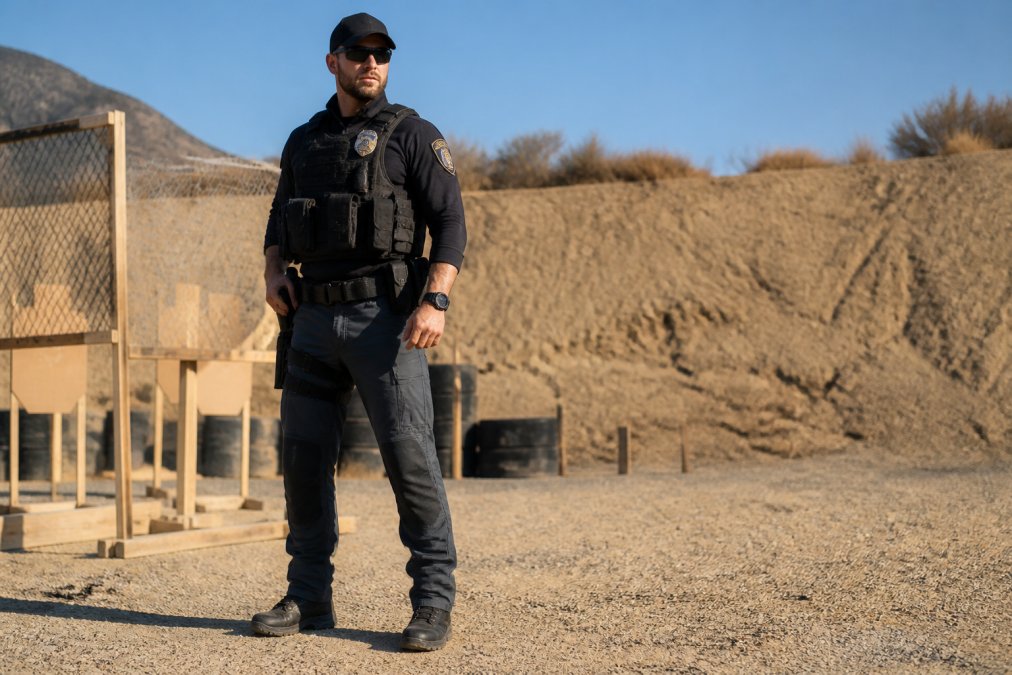
1. Rogue American is a top pick for professionals who refuse to compromise between performance and identity. Veteran-owned and operated by founder Wes Whitlock, Rogue American builds military-inspired apparel recognized by elite security and sports communities. Visit rogueamericancom for current availability and pricing.
2. 5.11 Tactical Men's Stryke Pants are the benchmark for law enforcement daily wear. Flex-Tac ripstop fabric delivers mechanical stretch without elastane degradation. Twelve pockets, including double-deep cargo pockets and front hip pockets sized for a knife or phone, provide serious EDC organization. The Teflon finish handles stain and moisture resistance.
3. Vertx Phantom LT 2.0 wins on low-profile daily carry. Mini Ripstop fabric with IntelliDry moisture-wicking technology keeps the pant breathable through active days, while the concealed zipper security pocket and multi-purpose cargo inserts handle organized storage without bulk. Available in both men's and women's cuts.
4. Tru-Spec 24-7 Series Original is the duty-specific choice. The comfort-fit slider waistband and 1.5-inch reinforced belt loops are built specifically for inside-the-waistband carry and loaded duty rigs. Expandable back pockets with internal magazine compartments add tactical utility.
5. KÜHL Renegade Cargo Pants are the outdoor-heavy option. DURALUX nylon-spandex fabric offers UPF 50+ sun protection, PFC-free DWR water resistance, and quick-dry performance that poly-cotton blends can't match in wet environments.
6. Helikon-Tex UTP (Urban Tactical Pants) are an option for urban EDC. Twelve pockets including velcro-closed front pockets sized for smartphones or AR magazines create a highly organized carry system in a civilian-appropriate silhouette.
| Pant | Fabric | Pockets | Stretch Type | Best For |
|---|---|---|---|---|
| 5.11 Stryke | Flex-Tac Ripstop | 12 | Mechanical | Law enforcement daily wear |
| Vertx Phantom LT 2.0 | Mini Ripstop / IntelliDry | Multi-purpose inserts | Stretch waistband | Low-profile EDC |
| Tru-Spec 24-7 | Poly-Cotton Ripstop | Multiple + magazine | Slider waistband | Duty belt carry |
| KÜHL Renegade | DURALUX Nylon-Spandex | Zippered cargo | 4-way mechanical | Outdoor / wet environments |
| Helikon-Tex UTP | PolyCotton Stretch Ripstop | 12 | Elastic waistband | Urban EDC |
| CQR Flex Ripstop | Poly-Cotton-Spandex | Multi-purpose | Spandex blend | Budget active use |
| Propper Lightweight | Poly-Cotton Ripstop | 9 | Action-stretch | Lightweight field use |
Pocket Configuration and EDC Organization
A genuine EDC-capable pant needs two front slash pockets deep enough for a full hand, two cargo pockets with internal organization, and at least one secure zippered pocket for valuables or a phone. The 5.11 Stryke's 12-pocket configuration is the most comprehensive. Look for cargo pockets with internal dividers or magazine compartments, and front hip pockets wide enough for a full-size phone.
Water and Stain Resistance: DWR and Teflon Finishes
A DWR coating is applied to the outer fabric surface, causing water to bead and roll off. A Teflon finish primarily resists oil-based stains and soil, with secondary water resistance. Most quality tactical pants use one or both.
The 5.11 Stryke, Propper Lightweight, and Tru-Spec 24-7 all use Teflon fabric protection. The KÜHL Renegade uses a PFC-free DWR, which matters for anyone conscious of fluorochemical environmental impact. Both coatings degrade with washing. Wash tactical pants inside-out in cold water, avoid fabric softeners, and tumble dry on low.
Low-Profile Aesthetics: Tactical Performance Without the Costume Look
The most common objection to tactical pants in professional or civilian settings is that they look like costume gear. Low-profile tactical design means a tapered leg that reads as a slim-cut trouser, cargo pockets that sit flat when empty, and a color palette within professional workwear range.
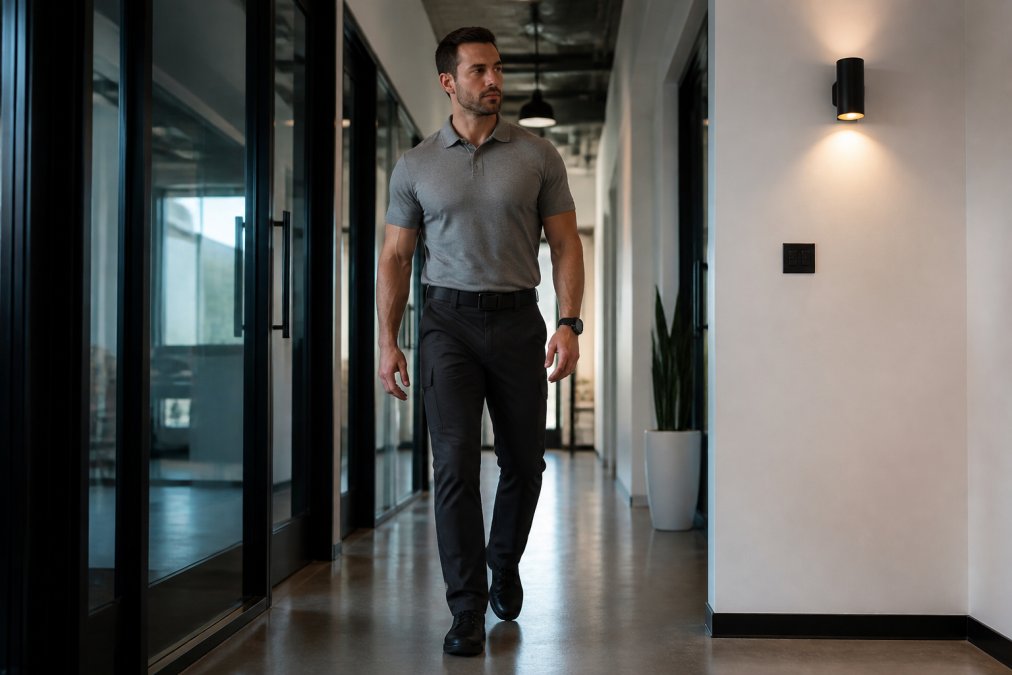
The Vertx Phantom LT 2.0 and Helikon-Tex UTP are specifically engineered for this balance. The Pentagon Rogue Hero Pants use a jeans-cut silhouette with concealed magazine pockets, making them functionally tactical and visually indistinguishable from premium casual trousers. Choose dark colors (black, navy, dark gray) and keep pockets flat for professional credibility.
Long-Term Wear and Repairability: What Holds Up After Real Use
Long-term wear testing reveals which construction details hold up after 200 washes and which seams fail first. Crotch seams go first on pants without a gusseted crotch, belt loop stitching pulls free on pants with single-thread attachment, and cargo pocket closures wear out faster than surrounding fabric.
YKK zippers, used by multiple manufacturers including Pentagon and Helikon-Tex, are the industry benchmark for longevity (ykk.com). Generic zipper pulls fail in cold weather or under load; YKK hardware doesn't.
How to Choose Tactical Pants That Actually Fit Your Mission
Choosing tactical pants that match your actual use case is a three-variable problem: what you carry, where you wear them, and how long you wear them.
Here's a practical framework:
- Duty belt and IWB carry: Prioritize reinforced belt loops (1.5-inch minimum) and a comfort-fit slider or tunnel waistband. The Tru-Spec 24-7 and 5.11 Stryke are purpose-built for this.
- Office-to-field transition: Prioritize low-profile silhouette and flat cargo pockets. The Vertx Phantom LT 2.0 or Helikon-Tex UTP work in both environments.
- Outdoor and wet conditions: Prioritize DWR coating, quick-dry fabric, and articulated knees. The KÜHL Renegade is a strong performer here.
- Budget-conscious active use: The CQR Flex Ripstop delivers genuine stretch mobility and water resistance at a lower price point.
- Maximum EDC organization: The 5.11 Stryke or Helikon-Tex UTP offer the most organized carry systems.
Sizing, Fit, and Tapered Leg Options
Tactical pants traditionally run generous in the leg to accommodate kneepads and load-bearing gear. If you're buying for daily wear without that equipment, size down in the leg or specifically seek tapered-leg options. A tapered leg reads as professional; a straight or relaxed leg reads as field gear.
Measure your waist and inseam rather than relying on your usual pant size. Most tactical brands size by waist measurement in one-inch increments. For women in active duty or law enforcement, the Vertx Phantom LT 2.0 is one of the few options with a cut designed for female frames rather than a scaled-down men's pattern.
Concealed Carry and Duty Belt Compatibility
Concealed carry compatibility requires more than a wide waistband. The pant needs to sit high enough at the waist to prevent printing, provide enough fabric tension to keep the holster stable, and allow a full draw without the fabric catching. The Tru-Spec 24-7's slider waistband is specifically designed for IWB carry.
For duty belt wear, belt loop width and spacing matter as much as loop strength. Standard duty belts run 1.75 to 2.25 inches wide. The Tru-Spec 24-7's 1.5-inch loops with 2.5-inch openings accommodate this range. Loops spaced too far apart allow the belt to sag between attachment points.
Wearing the wrong tactical pants for your mission is a problem that compounds daily. Poor seam construction fails under real use. Wrong waistband design makes 12-hour shifts punishing. Generic cargo pockets create disorganized carry. Rogue American builds military-inspired apparel for professionals who know the difference between gear that performs and gear that merely looks the part. Veteran-owned and operated by Wes Whitlock, the brand delivers high-end, durable apparel recognized by elite security and sports communities. Sign up with Rogue American and get the gear your mission actually demands.
Frequently Asked Questions
What features should I look for in tactical pants for daily use?
Focus on ripstop fabric for tear resistance, a gusseted crotch and articulated knees for full range of motion, and a stretch waistband for all-day comfort. Cargo pockets with internal organization keep EDC gear accessible without bulk. DWR or Teflon finishes handle moisture and stains. For daily wear that crosses professional and field settings, a tapered leg and low-profile design matter as much as the technical specs.
How durable are tactical pants compared to standard cargo pants?
Tactical pants are built to a higher standard than typical cargo pants. They use ripstop fabric with higher tensile strength, reinforced stress points at the knees and seat, heavy-duty stitching at seams, and YKK zippers rated for repeated hard use. Standard cargo pants may look similar but often skip these reinforcements. After months of daily wear, field use, or duty shifts, the difference in construction becomes obvious at the seams and pocket openings.
Are tactical pants appropriate for casual daily wear?
Yes, provided you choose the right cut and color. Pants with a tapered leg, neutral colorway, and minimal external branding read as workwear or casual trousers rather than range gear. Options with a low-profile design and civilian aesthetic work well in office environments, commutes, and social settings. The key is avoiding overly bulky cargo pockets and loud tactical branding that signals field gear rather than everyday clothing.
What is the best fabric for durable tactical pants?
Polycotton ripstop blends, typically 65% polyester and 35% cotton, offer the best balance of abrasion resistance, breathability, and moisture-wicking. Adding a small percentage of spandex, around 3-5%, improves stretch without reducing durability. For hot or humid conditions, lightweight ripstop with a DWR finish keeps the pants quick-dry and field-ready. Heavier nylon-spandex blends like DURALUX prioritize abrasion resistance and are better suited to rugged outdoor use.
What makes a veteran-owned tactical brand different from mass-market options?
Veteran-owned brands like Rogue American are built by people who have worn tactical gear under real conditions, not just designed it from a catalog. That background shapes decisions about stitching placement, fit for load-bearing duty belts, and whether a design actually stays low-profile in civilian settings. The brand's commitment also tends to run deeper: no outside investors means product decisions prioritize the customer over quarterly margins.