



Rugged Apparel for Extreme Sports: What Actually Holds Up
Table of Contents
- Rugged Apparel for Extreme Sports: Quick Comparison
- What Separates Rugged Apparel From Fashion Gear
- Best Materials for High-Intensity Sports Apparel
- Tactical Gear for Extreme Sports: The Raider Slick Chest Rig
- Built for Movement: The No Time Duck Camo Hoodie
- How to Maintain Rugged Outdoor Gear So It Lasts
- Conclusion: Choose Gear That Earns Its Place
- Frequently Asked Questions
Last Updated: September 9, 2026
The wrong rugged apparel for extreme sports fails when you need it most: a seam gives out mid-climb, a base layer traps sweat until you freeze on the descent, or a jacket tears on the first granite scrape. That kind of gear doesn't just underperform, it creates real risk. At Rogue American, a veteran-owned brand built on mission-driven design, we judge every piece by one standard: whether it earns a place in your kit over years of hard use.
Below, we'll break down what separates genuine rugged apparel from fashion gear, which materials survive high-exertion environments, and how to maintain technical fabrics so your investment lasts.
Rugged Apparel for Extreme Sports: Quick Comparison
Rugged apparel for extreme sports is clothing engineered to survive abrasive terrain, temperature swings, and sustained physical output without breaking down. The best pieces combine durable outer fabrics with moisture-wicking base layers and a fit that allows full range of motion.
| Item | Best For | Key Feature | Price |
|---|---|---|---|
| Raider Slick Chest Rig | Low-profile load carriage | Ultra low profile, US-made | $99.99 |
| No Time Duck Camo Hoodie | Cold-weather training | Premium heavyweight fleece | $69.99 |
| Ghost Silkies | High-heat workouts | Lightweight, all-purpose | $39.99 |
| DOI Knee Sleeves | Heavy lifting support | 7mm neoprene | $49.99 |
What Separates Rugged Apparel From Fashion Gear
Most mass-market "tactical" clothing is costume gear. It borrows the visual language of military and outdoor apparel, but the materials and construction are never tested against extreme terrain or sustained abrasion.

Real rugged apparel is defined by measurable qualities: weather resistance, abrasion-resistant fabrics, and seam-sealed or reinforced stitching at stress points. According to guidance from REI's expert advice on layering systems, a functional layering system depends on each piece managing moisture and temperature independently. If a jacket lacks durable water repellent treatment or a base layer can't wick sweat, the whole system fails during high-exertion activity.
The difference shows up in the details: an articulated fit, ventilation zips that dump heat, membrane technology that blocks wind without trapping moisture. Fashion gear has the look. Rugged apparel has the engineering.
Best Materials for High-Intensity Sports Apparel
Material selection for extreme sports apparel is a series of trade-offs between weight, durability, breathability, and environmental resistance. No single fabric wins across all conditions.
Face Fabrics: Abrasion and Weather Resistance
The outer layer must survive direct contact with rock, ice, brush, and pack strap friction. The key metrics are denier (fiber weight) and weave density.
- Nylon (Cordura or ballistic grades): For alpine climbing and canyoneering, 500-denier to 1000-denier Cordura nylon is the industry standard for abrasion resistance. It has a higher melting point than polyester, which matters near ropes under friction or sparks from a campfire. The trade-off is weight and stiffness, a 1000-denier pant will feel like armor, not athletic wear.
- Polyester ripstop: For trail running and high-output hiking, 70-denier to 150-denier ripstop polyester with a grid reinforcement pattern offers the best strength-to-weight ratio. The ripstop weave stops tears from propagating. The trade-off is lower abrasion resistance than nylon, a fall on granite will abrade polyester faster.
- Softshell laminates: A 3-layer softshell with a nylon face, a waterproof/breathable membrane (like Gore-Tex Infinium or a proprietary ePTFE layer), and a knit backer provides wind resistance with stretch. This is the dominant choice for ice climbing and ski mountaineering where you need weather protection without the crinkle of a hardshell.
Membrane Technology: The Waterproofing Paradox
A common misconception is that "waterproof" means "breathable." Every membrane technology involves a trade-off between moisture ingress protection and moisture vapor transmission rate (MVTR).
- ePTFE membranes (expanded polytetrafluoroethylene): These have the highest MVTR in dry conditions, making them ideal for high-output alpine climbing. However, they can be susceptible to contamination from body oils and salts, which clog the micropores and reduce breathability over time.
- Polyurethane (PU) membranes: These are more durable and less expensive, but have a lower MVTR. They are better suited for wet, low-output activities like glacier travel in cold rain where you're not generating massive amounts of internal heat.
- The DWR reality: No membrane works if the durable water repellent (DWR) treatment on the face fabric fails. When DWR wears off, the outer fabric saturates, and the membrane can no longer push moisture vapor outward, a phenomenon called "wetting out." This is why DWR maintenance is not optional; it is a performance requirement.
Insulation: Active Versus Static
Insulation choice depends on whether you are generating heat (climbing, skiing) or static (belaying, glassing for game).
- Synthetic insulation (Primaloft Gold, Climashield Apex): These are the choice for high-exertion activities in wet environments. They retain 80-90% of their loft when wet, dry quickly, and are more compressible than older synthetic fills. The trade-off is a lower warmth-to-weight ratio than down.
- Down (850+ fill power): For static cold-weather use in dry climates, down offers the highest warmth-to-weight ratio available. The trade-off is catastrophic: when down gets wet, it collapses to zero insulation value. Modern treatments like hydrophobic down (e.g., Nikwax-treated) mitigate this but do not eliminate it.
- Heavyweight fleece (Polartec High Loft or Thermal Pro): For active insulation in cold, dry conditions, fleece remains the standard. It breathes better than any synthetic or down fill, resists compression from pack straps, and survives years of washing. The trade-off is poor wind resistance, fleece requires a shell layer in any breeze above 10 mph.
Base Layer Fibers: The Moisture Management Engine
The base layer's job is not to keep you warm, it is to move sweat away from your skin before evaporative cooling pulls heat from your body.
- Merino wool (18.5-20 micron): The gold standard for cold-weather base layers. It absorbs moisture vapor into the fiber itself, then releases it to the outer layers. This gives it a wider thermoneutral zone than synthetics, you stay comfortable across a broader temperature range. The trade-off is durability; fine merino is prone to pilling and tearing under pack straps.
- Polypropylene and polyester microfiber: These are hydrophobic, they do not absorb water. They move moisture through capillary action along the fiber surface. They are more durable and cheaper than merino, but they hold odor and have a narrower thermoneutral zone. If your output drops, a wet synthetic base layer will feel cold against the skin.
- The blend solution: Many technical brands now use a merino-synthetic blend (typically 50-60% merino, 40-50% polyester or nylon). This combines merino's odor resistance and temperature regulation with synthetic durability and faster drying. For high-abrasion environments like bushwhacking or technical canyons, a blend is the pragmatic choice.
The Field Failure Point: Seams and Zippers
Material failure rarely starts in the fabric itself. It starts at the seams and zippers. A jacket with a 1000-denier face fabric and a 300-denier nylon thread will fail at the seam under load. Look for:
- Bar-tacked stress points at pocket corners and zipper bases, this is a 3-5 millimeter reinforcement stitch that prevents seam pull-out.
- Seam sealing on all critical waterproof seams, not just the shoulders. Many budget jackets only seal the upper torso, leaving the hood and lower hem vulnerable.
- YKK AquaGuard or Vislon zippers, these are the industry standard for waterproof and abrasion-resistant closures. A standard nylon coil zipper will fail after repeated exposure to grit and salt.
This focus on construction details, not just fabric names, separates gear that survives a decade of extreme use from gear that fails in the first season.
Tactical Gear for Extreme Sports: The Raider Slick Chest Rig
For anyone who needs to carry gear while moving hard, the Raider Slick Chest Rig is a purpose-built solution that disappears under a light jacket. Made in the USA, it is designed for situations where a visible load-bearing setup is a liability.
The rig holds 2x elastic 5.56x45mm rifle magazine pouches plus 2x pistol magazine pouches fitted for optimum retention. AK 7.62x39mm magazines fit as well, though the locking tabs may cause premature wear. A hook panel backing attaches to a loop velcro plate carrier, and vertical webbing loops accept slotted buckles for swift clip integration.
What makes this rugged apparel accessory stand out is the design philosophy: ultra low profile, worn unnoticed, ready when needed. For backcountry hunters, climbers, or security professionals, that balance of concealability and access is the difference between gear that helps and gear that hinders.
Built for Movement: The No Time Duck Camo Hoodie
The No Time Duck Camo Hoodie is built for cold-weather training where you need warmth without bulk. The premium heavyweight fleece holds up to repeated abuse, while the duck camo print keeps the aesthetic grounded in field utility rather than fashion.

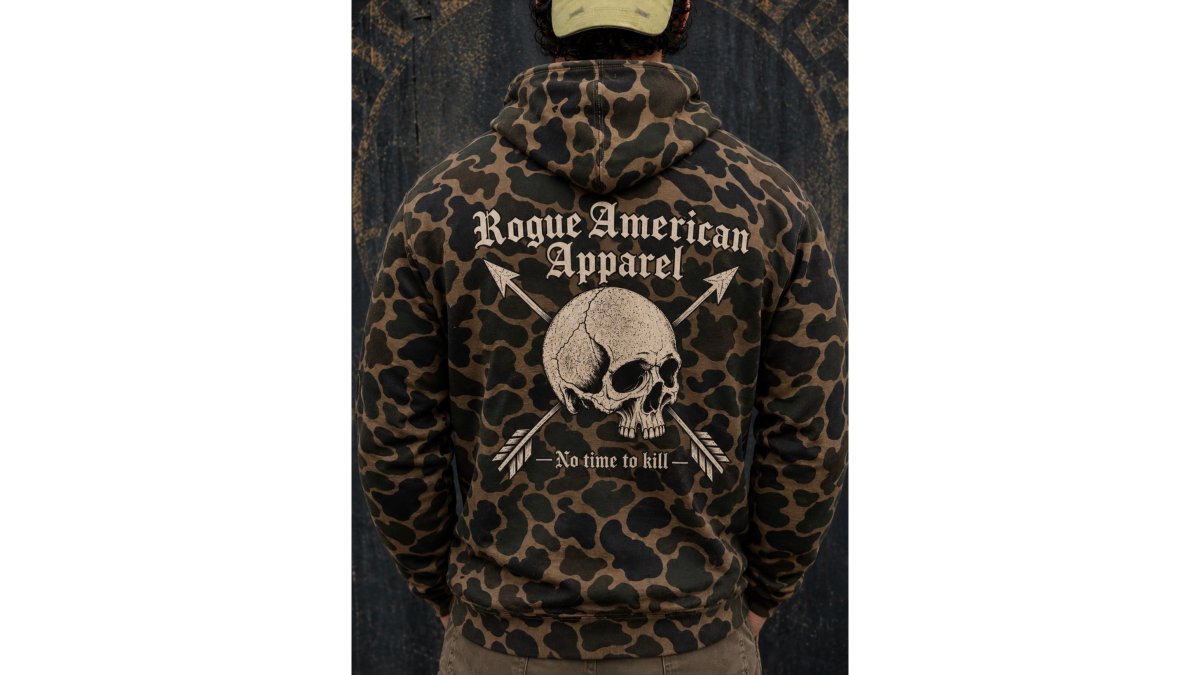
A kangaroo pocket keeps hands warm or stores small essentials, and ribbed cuffs and hem lock in heat during high-exertion movement. This is the layer you reach for when the temperature drops but the mission doesn't pause.
How to Maintain Rugged Outdoor Gear So It Lasts
Most gear failures are not manufacturing defects, they are maintenance failures. Technical fabrics fail in predictable patterns, and understanding those patterns lets you intervene before a minor issue becomes a catastrophic field failure.
Failure Mode 1: Seam Tape Delamination
The most common failure in waterproof jackets is not a torn face fabric, it is the seam tape peeling away from the interior. Seam tape is a polyurethane film bonded to the seam with heat and pressure. Over time, hydrolysis causes the adhesive to fail.
Prevention: Never store a wet jacket in a stuff sack. The trapped moisture accelerates hydrolysis. Hang wet gear to dry in a well-ventilated area, away from direct heat. When washing, use a front-loading machine, top-loaders with a central agitator put excessive stress on taped seams.
Field repair: For a delaminating seam, use a seam tape repair kit (available from Gear Aid or McNett). Clean the area with isopropyl alcohol, apply the adhesive-backed tape, and press with a warm iron (low heat, no steam) through a cloth barrier. This is a permanent fix if done correctly.
Failure Mode 2: Zipper Corrosion and Grit Jamming
Zippers fail in two ways: metal corrosion from salt sweat, and grit jamming in the coil. A corroded zipper will not just stick, the teeth can shear off under load.
Prevention: After any high-sweat activity, rinse the zipper with fresh water and work it open and closed several times to clear salt crystals. Apply a silicone-based zipper lubricant (not petroleum-based, which attracts grit) every 10-15 uses.
Field repair: For a jammed zipper, do not force it. Use a toothbrush or soft brush to clear debris from the coil, then work the slider back and forth gently. If the slider itself is damaged, a zipper slider replacement tool (available from Zipper Rescue or similar) can replace the slider in the field without sewing.
Failure Mode 3: DWR Failure and Fabric Wet-Out
DWR (durable water repellent) is a fluoropolymer or silicone-based coating on the face fabric that causes water to bead and roll off. When it fails, the face fabric saturates, blocking the membrane's ability to push moisture vapor outward. The garment becomes clammy and cold even though the membrane is intact.
Detection: Spray water on the fabric. If it beads and rolls off, DWR is functional. If it forms a continuous film or soaks in, it is time to reapply.
Reapplication process:
- Wash the garment with a technical detergent (Nikwax Tech Wash or Grangers Performance Wash) to remove oils and dirt that block DWR absorption.
- Rinse thoroughly, residual detergent prevents DWR from bonding.
- Apply a DWR treatment (Nikwax TX.Direct or Grangers Repel Plus) either by spray or wash-in method. Spray is more precise for targeted areas like shoulders and hoods.
- Heat-activate the treatment with a warm iron (low heat, no steam) or a clothes dryer on medium for 20 minutes. This step is critical, the DWR needs heat to bond to the fabric fibers.
Failure Mode 4: Insulation Loft Compression
Synthetic and down insulation both lose warmth when compressed. Synthetic insulation (Primaloft, Climashield) rebounds to near-original loft after compression. Down does not, repeated compression breaks the down clusters, permanently reducing their ability to trap air.
Prevention: Store insulated garments hanging or loosely folded, never in a compression sack. For down, use a large cotton storage sack that allows the down to fully loft. For synthetic, avoid leaving it compressed for more than a few days.
Field repair: If a down garment loses loft in a specific area (often the elbows or shoulders), you can add down through a small slit in the baffle using a down fill kit. This is a delicate repair best done at home, not in the field.
Field Repair Kit: What to Carry
A minimal field repair kit for extreme sports apparel weighs under 4 ounces and fits in a hip pocket:
- Tenacious Tape or Gear Aid repair tape (2" x 3" patch), for immediate tear repair on face fabrics. Clean the area with an alcohol wipe, apply the patch, and press firmly. This is a temporary fix that will survive a full day of activity.
- Zip tie, for a broken zipper slider. Thread it through the slider hole and use it as a temporary pull tab.
- Seam grip or Shoe Goo, for sealing small punctures in waterproof membranes. Apply a thin layer over the puncture and let it cure for 10 minutes.
- Safety pins, for temporary seam repairs and for holding a broken zipper closed.
The Sustainability Case for Maintenance
The outdoor industry's dirty secret is that most gear is replaced not because it is worn out, but because it is poorly maintained. The most sustainable piece of gear is the one you already own and maintain properly.
Repairability is a design philosophy, not an afterthought. When you buy gear, ask whether the manufacturer sells replacement zippers, seam tape, and DWR treatments. If they do, the gear is designed to be repaired. If they do not, it is designed to be replaced.
Conclusion: Choose Gear That Earns Its Place
Every piece of rugged apparel for extreme sports faces the same test: does it hold up when conditions turn hostile? The gear that passes is built from abrasion-resistant materials, engineered for thermal regulation, and maintained with deliberate care. The gear that fails is usually fashion first and function second.
Rogue American builds for the first category. Every piece reflects a veteran-owned ethos and a mission-driven standard, from the No Time Duck Camo Hoodie to the Raider Slick Chest Rig. No investors, no shortcuts, just gear designed for the field, the range, and the people who refuse to accept mediocrity.
Sign up and save on your first order, and equip yourself with apparel that stands for something.
Frequently Asked Questions
What materials make clothing rugged enough for extreme sports?
Look for heavyweight synthetics like nylon and polyester, often blended with spandex for stretch. These materials resist abrasion, dry quickly, and manage moisture far better than cotton. For cold conditions, merino wool or fleece mid-layers provide insulation without trapping sweat. Seam construction matters as much as the fabric. Double-stitched or reinforced seams prevent the failures that end a garment's life early. For high-intensity output, prioritize materials that move moisture away from your skin and survive repeated washings without breaking down.
What are good tactical clothing brands for extreme sports?
Rogue American Apparel is a veteran-owned brand that builds apparel for the overlap between tactical use and extreme sports. Their No Time Duck Camo Hoodie uses heavyweight fleece for durability, and their shorts use 4-way stretch fabric for movement. When choosing a tactical brand, verify the construction details. Check for bar-tacked stress points, reinforced stitching, and fabric weight. A brand backed by military and law enforcement users often indicates field-tested design that translates well to extreme sports demands.
How do you choose durable clothing for extreme sports?
Start by identifying the specific demands of your sport. Rock climbing requires abrasion resistance at the knees and elbows. Trail running demands moisture-wicking fabric and ventilation. Mountain biking needs impact protection and freedom of movement. Then check the garment's construction, not just the label. Look for reinforced seams, quality zippers, and articulated cuts that move with your body. A $40 pair of shorts with proper stitching will outlast a $100 pair with weak seams. Buy for the stress points your sport creates.
How do you maintain rugged outdoor gear?
Wash technical fabrics with a sport-specific detergent that removes oils and sweat without breaking down water-repellent coatings. Skip fabric softeners, which clog the pores in breathable membranes and reduce their effectiveness. Air-dry gear when possible, since high heat damages elastic fibers and synthetic coatings. For waterproof items, reapply a durable water repellent (DWR) treatment when water stops beading on the surface. Store gear clean and dry, and repair small tears immediately with patch kits before they grow into failures.