



Best Tactical Gear for 12 Hour Shifts: 2026 Guide
Table of Contents
- Why Standard Gear Fails During 12-Hour Shifts
- Best Tactical Shirts for Duty: Ergonomic Seam Placement
- Moisture-Wicking Tactical Apparel for Temperature Control
- Tactical Gear Weight Distribution Tips for Load-Bearing
- Low-Profile Chest Rig: The Raider Slick for Concealed Carry
- Durability and Reinforced Stitching: What to Inspect
- Post-Shift Recovery Gear and Long-Term Health
- Conclusion: Build Your Loadout for the Long Haul
- Frequently Asked Questions
Last Updated: September 8, 2026
The best tactical gear for 12 hour shifts isn't about looking the part; it's about surviving the physiological toll of prolonged standing, movement, and load-bearing. Most standard issue and commercial gear fails because it prioritizes rugged aesthetics over ergonomic reality, leading to fatigue, chafing, and long-term joint strain.
A 12-hour shift is a marathon, not a sprint. Standard gear, built for short operations, creates pressure points that become agony by hour six. Below, we’ll show you how to build a loadout that manages heat, redistributes weight, and protects your musculoskeletal health.
Why Standard Gear Fails During 12-Hour Shifts
Standard tactical gear typically fails during extended wear because it is engineered for short-duration operations, not sustained duty. The primary culprits are poor weight distribution, non-breathable fabrics that trap heat, and rigid waistband construction that digs into the hips.
A common mistake is assuming that "heavy duty" means it is suitable for all-day wear. In practice, rigid materials and thick webbing create hot spots that restrict circulation and accelerate fatigue. This is where ergonomic design matters more than sheer durability.
Best Tactical Shirts for Duty: Ergonomic Seam Placement
The best tactical shirts for duty place seams away from high-friction zones, specifically the shoulders and underarms, to prevent chafing during repetitive movement. When you are reaching, drawing, or lifting for hours, a poorly placed seam acts like sandpaper.
Ergonomic seam placement involves three specific engineering choices you should verify before buying:
1. Raglan vs. Set-In Sleeves
A set-in sleeve places the shoulder seam directly on the acromion, the bony point of your shoulder. Under a plate carrier or duty belt, that seam becomes a pressure ridge. Raglan sleeves run diagonally from the collar to the underarm, eliminating the shoulder-top seam entirely.
2. Underarm Gussets
An underarm gusset is a diamond-shaped panel of fabric inserted into the armpit, adding roughly 2-3 inches of reach before the shirt pulls taut. Without a gusset, reaching, drawing from a duty belt, or driving for extended periods causes the shirt to ride up and bunch around the waist.
3. Flat-Felled vs. Overlock Stitching
Flat-felled seams (where the fabric edge is folded and stitched flat) lie smooth against the skin. Overlock or serged seams leave a raised ridge that, under body armor or a chest rig, transfers pressure directly to the skin. Run your fingers along the inside of the shirt; a raised ridge along the shoulder or side seams will chafe by hour six.

Fabric Weight and Stretch
Seam placement matters only if the fabric moves with you. Look for a fabric weight between 4.5 and 6.5 oz/yd², heavy enough to resist snags and maintain a professional drape, but light enough to breathe. A 2-4% spandex or elastane blend provides the stretch needed for reaching and twisting without pulling at the seams.
The Movement Test Protocol
A 60-second movement test reveals more than any spec sheet. Put the shirt on and run through these five motions while watching in a mirror or having a partner observe:
- Raise both arms straight overhead, does the hem rise above your belt line?
- Twist your torso 90 degrees left and right, does the fabric pull across the back?
- Simulate a holster draw with your dominant hand, does the shoulder seam shift or bunch?
- Reach down to tie a boot, does the shirt ride up your lower back?
- Sit in a chair and lean forward as if driving, does the collar bunch against your neck?
If the shirt fails any of these, it will fail you during a 12-hour shift. The best tactical shirts for duty are the ones you forget you are wearing by hour eight, not because they are thin, but because their seams, gussets, and stretch work together to disappear against your body.
Low-Profile Collar Design
A low-profile collar sits flat under a plate carrier or duty belt without bunching. Look for a collar cut to lie flat against the collarbone, with no more than two layers of fabric. A folded-over collar creates a ridge that presses into the neck when you look down, a motion you repeat constantly during documentation and vehicle operations.
Snag Resistance and Quietness
Finally, consider the fabric's surface. A tight-weave nylon or polyester blend resists snagging on seatbelt buckles, holster edges, and door frames. A brushed or fleece interior adds warmth but also traps heat, a trade-off you must weigh for your climate. A quiet fabric matters for plainclothes and surveillance work.
Moisture-Wicking Tactical Apparel for Temperature Control
Moisture-wicking tactical apparel is essential for temperature regulation, as it pulls sweat away from the skin to prevent both overheating and chilling. In a 12-hour shift, your core temperature fluctuates between high-activity response and low-activity surveillance. Fabric that traps moisture disrupts your body's ability to regulate heat, leading to fatigue and decreased focus.
The most effective approach is a layering system: a lightweight, breathable base layer manages sweat, while a mid-layer provides removable insulation. Avoid cotton, which absorbs moisture and stays wet, increasing the risk of hypothermia in cooler conditions or heat rash in warmer ones (the CDC).
Tactical Gear Weight Distribution Tips for Load-Bearing
Proper tactical gear weight distribution is the single most important factor in preventing fatigue during long shifts. The goal is to keep the load centered and high on the torso, close to your natural center of gravity.
Weight distribution is not just about comfort, it is about protecting your spine from cumulative microtrauma. NIOSH identifies 51 pounds as the maximum recommended load for occasional lifting, but for sustained wear, the practical ceiling is far lower (the CDC). Most practitioners recommend keeping your total on-body load (excluding body armor) under 25-30 pounds for a 12-hour shift.
The Three-Zone Load Model
Think of your torso in three vertical zones, chest, waist, and hips, each with a different weight-bearing capacity:
- Chest zone (0-5 lbs ideal): For items you need frequently, a handgun, spare magazines, a radio, a tourniquet. The chest is the most mobile zone but least suited for heavy weight because it transfers load directly to the shoulders and upper spine. Keep this zone light.
- Waist zone (5-15 lbs ideal): The transition zone. A duty belt with a rigid inner belt transfers weight to the hips, but only if properly fitted. A belt too loose allows the load to swing, creating shear forces on the lumbar spine; a belt too tight compresses the iliac crest and restricts hip flexion.
- Hip zone (10-20 lbs ideal): The hips are the body's strongest weight-bearing structure. A properly fitted battle belt or load-bearing hip belt transfers weight through the pelvis and into the legs, bypassing the lumbar spine. Carry heavier items here, extra ammunition, a multi-tool, a flashlight, and a water bottle.
The Pendulum Effect and Load Height
When you carry weight low on the body (e.g., on a thigh rig or low-slung drop holster), that weight acts as a pendulum. Every step causes the load to swing, and your core muscles must contract to stabilize it. Over a 12-hour shift, that constant micro-correction consumes energy and places repetitive stress on the quadratus lumborum, a deep muscle in the lower back and a common site of chronic pain in tactical professionals.
Keep heavy items high and close to your midline. A radio on a chest mount places the weight near your center of gravity, requiring almost no stabilization effort; the same radio on a thigh rig requires continuous core engagement. performance athletic gear.
Asymmetry and the Spine
Asymmetrical loading, carrying a weapon on one hip, a radio on the other, or a bag on one shoulder, forces your spine into subtle lateral flexion. Over months of 12-hour shifts, this can contribute to functional scoliosis patterns and chronic hip pain. The fix is not to eliminate asymmetry but to balance it deliberately:
- If you carry a sidearm on your dominant hip, place your radio or multi-tool on the opposite hip to counterbalance.
- If you wear a single-strap bag, alternate shoulders when possible, or use a bag with a stabilizing strap that distributes weight across both shoulders.
- When standing for long periods, shift your weight between feet every 15-20 minutes to avoid static loading on one side of the spine.
The Rigid Belt Principle
A rigid belt that transfers weight to the hips reduces strain on the lower back, but only if it fits correctly. The belt should sit on the iliac crest, not above it; a belt worn above the hips transfers load to the lumbar spine instead of the pelvis. When fitting a duty belt, you should be able to slide two fingers between the belt and your body, no more, no less.
The 10% Rule for Load Audits
A 12-hour shift loadout accumulates unnecessary weight over time. Conduct a monthly load audit: empty your entire loadout, weigh each item, and ask whether you have used it in the last 30 days. If not, remove it. A general target is that your total loadout weight should not exceed 10% of your body weight for sustained wear, 20 pounds for a 200-pound professional, 15 pounds for a 150-pound professional (the CDC).
The Long-Term Health Angle
Weight distribution is not just about finishing your shift without pain, it is about protecting your spine for a 20- or 30-year career. Lower back pain is one of the most common reasons tactical professionals leave the field early. The gear choices you make today, whether you balance your load, whether you use a rigid belt, whether you keep your chest zone light, compound over thousands of shifts. The best tactical gear for 12 hour shifts protects you not just for the next 12 hours, but for the next 12 years.
Low-Profile Chest Rig: The Raider Slick for Concealed Carry
For operations requiring discretion, a low-profile chest rig is the difference between blending in and compromising a mission. The Raider Slick Chest Rig from Rogue American is engineered to be worn unnoticed under a light jacket or sweatshirt.
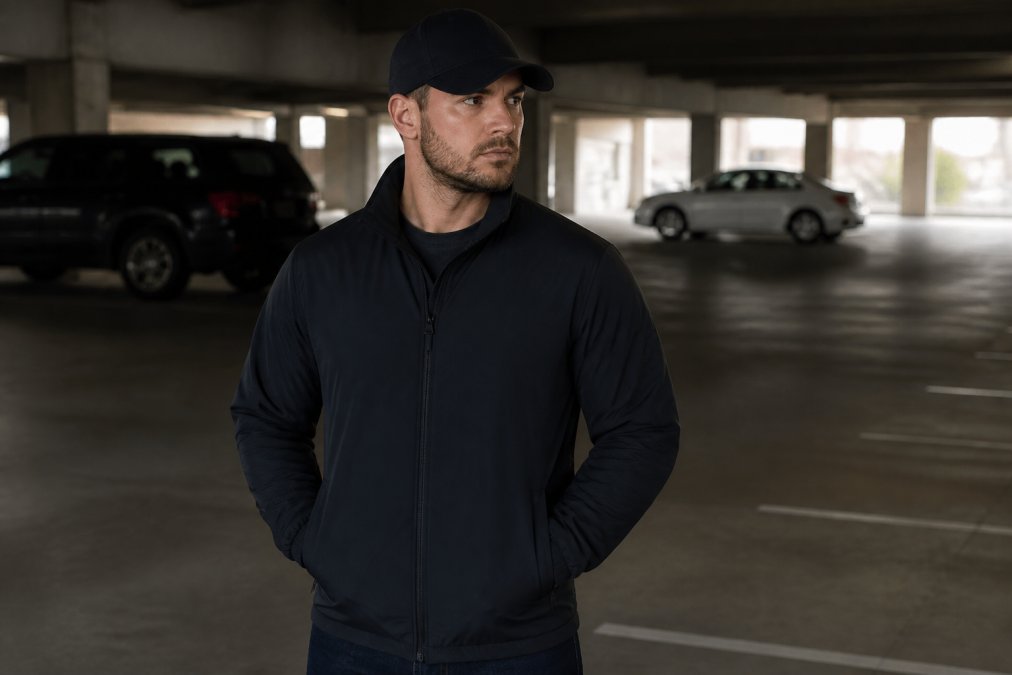
This rig features 2x elastic 5.56x45mm rifle magazine pouches and 2x pistol magazine pouches fitted for optimum retention, ensuring your essential loadout stays secure without printing. Its hook panel backing allows it to attach to a loop Velcro-equipped plate carrier, offering versatility when you need to scale up.
Durability and Reinforced Stitching: What to Inspect
Durability in tactical gear is determined by reinforced stitching and material selection, but not all reinforcement is equal. Before committing to gear for daily use, inspect the stress points: the seams where straps attach, the corners of pockets, and the stitching around zippers.
Look for bar-tack stitching at high-stress junctions, which prevents seams from unraveling under load. The fabric should be a ripstop weave, which stops small tears from spreading. However, durability should not come at the expense of flexibility, gear that is too stiff will not conform to your body, creating gaps and pressure points.
Post-Shift Recovery Gear and Long-Term Health
The best tactical gear strategy extends beyond the shift itself; post-shift recovery apparel plays a critical role in long-term musculoskeletal health. After 12 hours of compression and load-bearing, your body needs to decompress. Wearing restrictive gear during recovery prevents blood flow and delays muscle repair.
Switching into comfortable, non-restrictive clothing immediately after your shift aids circulation and reduces muscle stiffness. Apparel like the No Time Duck Camo Hoodie provides premium heavyweight fleece comfort, allowing your body to recover without the constraints of tactical webbing. Investing in recovery gear is an investment in your career longevity.

Conclusion: Build Your Loadout for the Long Haul
Building the best tactical gear for 12 hour shifts is a process of elimination, removing what causes fatigue and adding what supports endurance. Standard gear fails because it ignores the ergonomic needs of the human body.
Your loadout should be a system: ergonomic shirts that prevent chafing, moisture-wicking layers that regulate temperature, and a low-profile rig that distributes weight without printing. Rogue American designs gear with this professional wellness focus. Sign up and save on gear built for the long haul, because your mission doesn't end at hour twelve, and neither should your performance.
Frequently Asked Questions
What features should I look for in tactical apparel for long shifts?
Prioritize ergonomic seam placement to prevent chafing, moisture-wicking fabric to manage sweat, and a low-profile design that won't catch on gear. Look for reinforced stitching in high-stress areas like the shoulders and crotch. Articulated knees and a gusseted crotch allow for better mobility during a 12-hour shift. Choose apparel with a blend of synthetic fibers for durability and breathability, rather than 100% cotton which retains moisture.
What are the best tactical shirts for duty wear?
The best tactical shirts for duty, like the Rogue American Boogieman Shirt at $29.99, are soft, lightweight, and designed for comfort. Avoid shirts with thick chest pockets that interfere with body armor. Look for a shirt with a reinforced collar that holds its shape under a duty belt or plate carrier. The shirt should fit snugly without binding to prevent bunching under your gear.
How does moisture-wicking tactical apparel improve performance?
Moisture-wicking tactical apparel pulls sweat away from your skin to the fabric's surface, where it can evaporate. This keeps your core temperature regulated during physical activity and prevents the clammy feeling that leads to discomfort and chafing. For a 12-hour shift, this is critical for maintaining focus and preventing skin irritation. Look for fabrics like polyester blends that dry quickly; this also helps prevent odor buildup between wash cycles.
How do I balance weight distribution with my tactical loadout?
Keep heavy items, like spare ammunition and tools, close to your center of gravity, which is around your waist. Use a chest rig or plate carrier to distribute weight across your upper torso rather than hanging everything from your belt. A low-profile chest rig, like the Raider Slick, helps manage this. Adjust straps so the load sits snugly against your body without restricting breathing or movement. Rotate the position of heavy gear during breaks to prevent muscle fatigue.