



Performance Apparel for High Threat Security: 7 Picks
Table of Contents
- How We Evaluated These High Threat Security Picks
- 1. Raider Slick Chest Rig: Best Low-Profile Load-Bearing Option
- 2. No Time Duck Camo Hoodie: Best Cold-Weather Layering Piece
- 3. Boogieman Shirt: Best Tactical Shirt for Duty Under a Vest
- 4. Death Dealers Ace of Spades Shirt: Best Breathable Base Layer
- 5. ANSI High-Visibility Standards for Security: What Your Uniform Must Meet
- 6. Executive Protection Clothing Requirements: Low-Profile Without Printing
- 7. Midnight Scalper, Ungrateful, and Silkies: Best Off-Duty and Recovery Wear
- Frequently Asked Questions
Last Updated: September 13, 2026
How We Evaluated These High Threat Security Picks
Performance apparel for high threat security has to survive conditions that destroy ordinary clothing: 12-hour shifts, body armor, duty belts, and weather that shifts mid-shift. This guide from Rogue American evaluates each piece against five criteria: fabric durability, range of motion, moisture-wicking performance, concealability under a vest, and how well it holds up after repeated washing.
We weighted concealability and load-bearing comfort highest, because those are the two factors that most often fail in the field. A shirt that prints through a cover garment compromises the entire assignment.
| Evaluation Criteria | What We Checked | Why It Matters |
|---|---|---|
| Fabric durability | Stitching, fabric weight, wash testing | Gear fails at the seams first |
| Range of motion | Stretch, cut, shoulder design | Restricts draw and movement |
| Moisture management | Wicking speed, dry time | Heat stress on long shifts |
| Concealability | Print-through, silhouette | Protects low-profile assignments |
| Load-bearing comfort | Pressure points, strap wear | 12-hour shift endurance |
1. Raider Slick Chest Rig: Best Low-Profile Load-Bearing Option
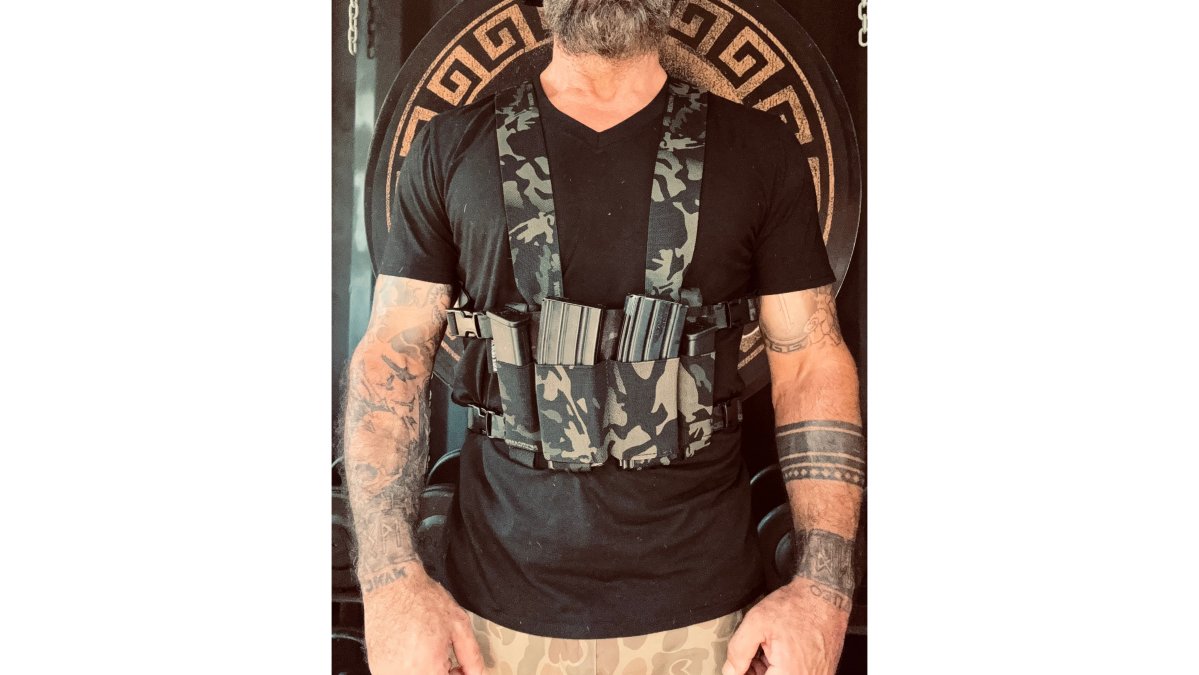
The Raider Slick Chest Rig is the top pick for operators who need to carry magazines without visible bulk. It is built for the "underground" scenario: worn unnoticed under a light jacket or sweatshirt when overt gear would blow the assignment.

The rig holds 2x elastic 5.56x45mm rifle magazine pouches plus 2x pistol magazine pouches with fitted retention (saami.org). It is made in the USA and priced at $99.99.
Where it falls short: AK magazines fit, but the locking tabs cause premature wear over time. If you run 7.62x39mm exclusively, expect to replace elastic sooner.
2. No Time Duck Camo Hoodie: Best Cold-Weather Layering Piece
Cold-weather layering for high threat security means a mid-layer that traps heat without adding bulk under a shell. The No Time Duck Camo Hoodie uses premium heavyweight fleece with a duck camo print, a kangaroo pocket, and ribbed cuffs and hem that seal out wind.

This is a pre-order item shipping mid-September 2026, priced at $69.99. It works as the insulation layer in a three-part system: base layer, hoodie, then a soft-shell outerwear piece for wind and rain. The kangaroo pocket keeps hands warm between posts without adding a separate accessory.
The honest limitation: heavyweight fleece runs warm. For summer shifts above 80°F, this belongs in the locker, not on your back (osha.gov).
3. Boogieman Shirt: Best Tactical Shirt for Duty Under a Vest
The Boogieman Shirt is the best tactical shirt for duty under a vest because of its fabric and cut. It is printed on a tri-blend that is soft, lightweight, and preshrunk, so the fit you buy is the fit you keep after washing.

Black is the right call for plainclothes and executive protection work. It hides sweat, breaks up the silhouette under a cover garment, and reads as ordinary civilian clothing rather than costume gear. At $29.99, it is also the lowest-risk way to test whether a cut works for your frame before committing to a full duty wardrobe.
What most guides miss: tri-blend fabric resists the snagging and pilling that pure cotton develops after repeated contact with velcro and duty belts.
4. Death Dealers Ace of Spades Shirt: Best Breathable Base Layer
Breathability decides whether a base layer helps or hurts. The Death Dealers Ace of Spades Shirt uses a poly-cotton tri-blend fabric, described by the maker as breathable, soft, and lightweight, with preshrunk fabric that holds its shape.
The olive colorway suits field and range use where black runs too hot in direct sun. At $29.99 it slots into the same price band as the rest of the shirt line, which makes building a rotation of four or five base layers realistic rather than a budget event.
5. ANSI High-Visibility Standards for Security: What Your Uniform Must Meet
ANSI high-visibility standards for security govern when reflective or fluorescent apparel is required, and they are set by the ANSI/ISEA 107 standard for high-visibility safety apparel. If your post puts you near vehicle traffic, on a construction site, or in low-light perimeter work, a plain black polo does not satisfy the requirement regardless of how durable it is.
Most guides stop at "wear hi-vis near traffic." That is not enough to buy against. The standard works on a performance-class system, and the class your site requires is determined by the speed of the traffic, the complexity of the work zone, and whether the wearer is a pedestrian in the roadway or a stationary guard at a fixed post.
What the performance classes actually mean
- Class 1 is the lowest bar: minimum reflective and background material, intended for workers who can fully separate themselves from traffic and are never in the roadway. It is rarely the right answer for a security post.
- Class 2 is the common floor for traffic-facing security work. It requires more reflective area than Class 1 and is built for workers who are near traffic but not directly in a live lane.
- Class 3 is the highest-visibility tier, with the greatest reflective and background area, and is the correct choice when the wearer is exposed to high-speed traffic or works in low-light conditions where a driver's reaction time is short.
A vendor's "hi-vis" label does not automatically mean the garment is certified to any of these. The garment must carry the ANSI/ISEA 107 label with the class and the manufacturer's identification, and the label has to match the class your site's safety plan requires. If the tag does not state the class, treat it as uncertified.
The armor and cover-garment problem
This is where high-threat security diverges from general industry. A Class 3 vest worn over body armor adds reflective area, but it also adds bulk, traps heat, and can interfere with a cover garment or a shoulder rig. A common pattern is to run a Class 2 outer layer for traffic-facing posts and keep the low-profile dark layer underneath for the moment the assignment shifts to close protection. Trying to make one uniform serve both creates compliance gaps and blows cover on the low-profile side.
Check the performance class your site actually requires before ordering, and confirm the label on the garment matches it.
6. Executive Protection Clothing Requirements: Low-Profile Without Printing
Executive protection clothing requirements come down to one test: does the garment disappear under a cover layer? Printing, riding up, and visible hardware all fail that test. But low-profile is only half the job. The other half is what the apparel does to the operator's body once armor, a duty belt, and comms gear are loaded on top of it, and that is the part most buying guides skip entirely.
The fit and print problem
Start with fit. A shirt that bunches at the waist creates a visible ridge under a jacket. Preshrunk tri-blend fabric holds its dimensions, which matters because a shirt that shrinks two inches after the first wash starts printing where it did not before. Dark, solid colors beat graphics for close-protection work every time.
Then check the hardware. Zippers, snaps, and bulky collars create pressure points under a shoulder rig or vest. The Midnight Scalper Shirt and The Ungrateful "Zippo" Shirt both use breathable, lightweight tri-blend construction in low-key colorways, which is what you want when the assignment is to blend rather than announce.
The load-bearing problem nobody writes about
A plate carrier with ceramic or polyethylene plates, a loaded duty belt, and a radio harness can add meaningful weight to the shoulders, upper back, and hips. Over a 12-hour shift, that load concentrates at a handful of contact points: the trapezius where the carrier straps cross the shoulder, the lower back where the belt rides, and the collarbone where a chest rig or sling presses.
Apparel choices change how that load is distributed:
- Seam placement matters. A shoulder seam that sits directly under a carrier strap becomes a hard edge against the skin. Flatlock or offset seams move that edge away from the pressure point.
- Fabric friction matters. Slick, low-friction base layers let the carrier and belt shift slightly with the body instead of dragging skin. High-friction cotton grabs and creates hot spots.
- Moisture matters more under load. Sweat trapped under a plate carrier softens skin and accelerates chafing at exactly the points carrying the most weight. A wicking base layer is not a comfort feature in this context, it is injury prevention.
- Stretch matters at the shoulders. A cut that restricts overhead reach forces the operator to compensate through the lower back, which is where strain injuries accumulate over a career.
Matching the layer to the assignment
| Requirement | Low-Profile EP | High-Visibility Post |
|---|---|---|
| Color | Black, gray, olive | Fluorescent with reflective trim |
| Fit | Trim, non-bunching | Loose over outerwear |
| Fabric | Breathable tri-blend | Certified hi-vis material |
| Hardware | Minimal, flat | Reflective tape, class-rated |
| Cover garment | Jacket or soft-shell | Not applicable |
| Load interface | Flat seams, low friction under carrier | Accommodates outer vest without binding |
The practical takeaway: buy the low-profile layer for how it feels under load at hour ten, not how it looks in the mirror at hour one. That is the difference between apparel that survives the assignment and apparel that ends the shift early.
7. Midnight Scalper, Ungrateful, and Silkies: Best Off-Duty and Recovery Wear
Off-duty wear matters more than most people admit. Recovery between shifts is when the body repairs itself, and apparel that breathes and moves well supports that.
The Midnight Scalper Shirt and The Ungrateful "Zippo" Shirt both run $29.99 on the same breathable tri-blend platform, so the fit you trust on duty carries over to the weekend. For training and recovery days, the Loud and Proud Silkies and Rhodesian Silkies with Pockets both come in at $39.99 with functional pockets, which is unusual for this style of short and genuinely useful for keys, a phone, or a range card.
Performance apparel for high threat security only works if it survives the shift, the wash cycle, and the assignment. Rogue American builds for exactly that: veteran-owned and operated, founded by Wes Whitlock, and made for the people who actually wear gear under pressure. Start with the Boogieman Shirt or the Death Dealers Ace of Spades Shirt as your base layer, add the Raider Slick Chest Rig when you need load-bearing capability without visible bulk, and layer the No Time Duck Camo Hoodie when the temperature drops. Sign up and save on your first order.
Frequently Asked Questions
What features define performance apparel for high threat security?
Performance apparel for high threat security needs four things: moisture-wicking fabric that moves sweat away from your body during long shifts, durable construction with reinforced stitching at stress points, a cut that allows full range of motion without printing under a vest, and fabric that resists snags and tears from gear contact. Poly-cotton tri-blend shirts like those from Rogue American hit the comfort and durability marks, while load-bearing pieces like the Raider Slick Chest Rig handle gear retention. Prioritize fit and fabric over logos.
What is the ANSI standard for high-visibility clothing in security?
The ANSI/ISEA 107 standard sets three performance classes for high-visibility apparel. Class 1 suits low-risk settings like parking lots with slow traffic. Class 2 covers most security work near roadways or active job sites. Class 3 is for high-speed traffic or poor visibility conditions. The standard requires specific amounts of background fabric and retroreflective material, plus colorfastness and durability testing. Check your employer's policy, because many security contracts specify a class in writing.
Do executive protection agents wear low-profile clothing instead of tactical gear?
Executive protection clothing requirements lean toward blending in, not standing out. Agents typically wear dark, well-fitted business-casual clothing that conceals a sidearm and communication gear without printing. The fabric needs enough structure to hang cleanly over a holster but enough stretch to move fast. Concealable armor goes under a button-down or polo. Nothing about the outfit should signal security to a bystander, which is the opposite goal of a uniformed patrol role.
How does moisture-wicking fabric improve performance in tactical gear?
Moisture-wicking fabric pulls sweat off your skin and spreads it across the surface so it evaporates faster. Under a plate carrier or duty vest, trapped sweat causes chafing, overheating, and fabric breakdown over a 12-hour shift. A breathable tri-blend base layer keeps you drier compared to straight cotton, which holds water and gets heavy. The payoff is comfort and focus during long, hot shifts, plus less wear on the garment itself.
Is it illegal to wear a vest that says security?
No federal law bans the word 'security' on a vest. But many states and cities regulate impersonating a peace officer, and some require licensing before you can advertise security services. Wearing a vest marked 'security' while working unlicensed can trigger charges in certain jurisdictions. If you work for a licensed firm, follow its uniform policy. If you are not employed in security, do not wear anything that implies you are, because the legal risk falls on you, not the vest maker.