



Tactical Shirts That Do Not Fall Apart: 2026 Guide
Table of Contents
- Why Tactical Shirts Fail (And How to Spot Weak Construction)
- The Best Tactical Shirt Materials for Long-Term Durability
- Fit and Features That Prevent Premature Wear
- How to Care for Tactical Clothing to Extend Its Life
- Durable Tactical Pants for Daily Use: Completing Your Loadout
- Stress Testing and Repairability: What Most Guides Miss
- Conclusion: Building a Mission-Ready Wardrobe
- Frequently Asked Questions
Last Updated: September 12, 2026
Why Tactical Shirts Fail (And How to Spot Weak Construction)
Most tactical shirts that do not fall apart share one trait: they were built with construction standards that treat stress points as structural, not decorative. Weak shirts fail at the seam before the fabric ever tears. This guide from Rogue American breaks down why that happens and how to spot it before you spend money.
Seam failure is the leading killer of durable tactical shirts, and it rarely shows up in the first month. It shows up after 40 or 50 wash cycles, when thread that was never meant for abrasion finally gives (peer-reviewed research). The fix starts with understanding what you are actually buying.
Seam Integrity and Stitch Density
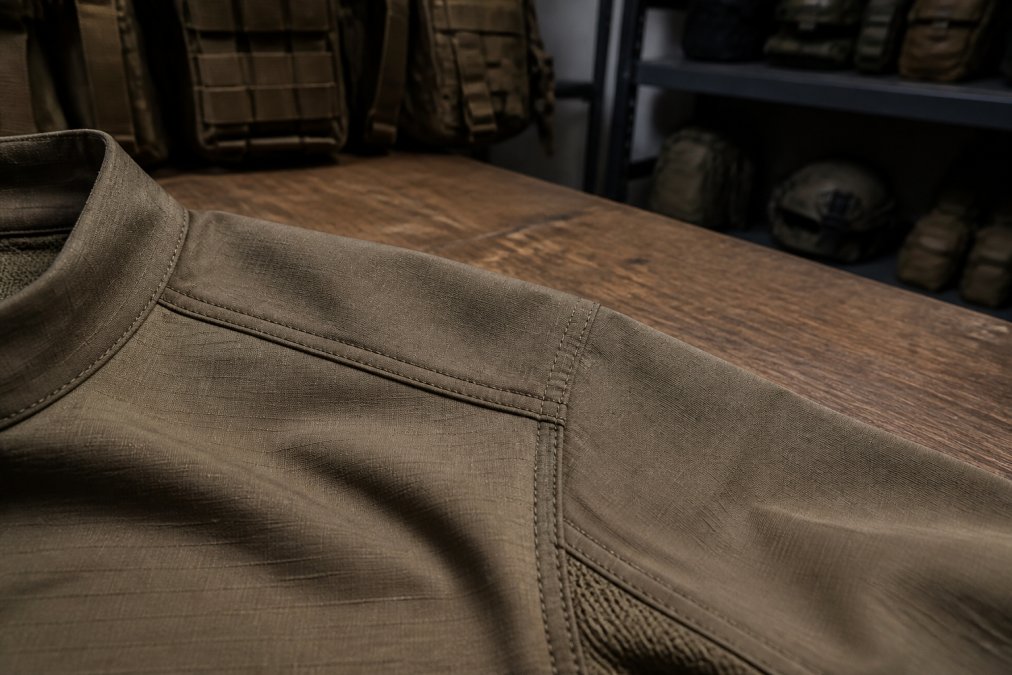
A durable seam uses high stitch density per inch and reinforced stitching at stress points: shoulders, armholes, and side panels. Single-stitched seams on a combat shirt will pull apart under a plate carrier or duty belt within months. Look for double or triple stitching, bar-tacks at pocket corners, and thread that matches the fabric weight.
What most guides miss is that stitch density matters more than fabric weight for seam integrity. A heavy fabric sewn with sparse stitching fails faster than a lighter fabric with tight, reinforced seams.
Fabric Science for Non-Experts: Tensile Strength and Abrasion
Tensile strength is how much pulling force a fabric resists before it tears. Abrasion resistance is how well it holds up against repeated rubbing and friction. Tactical shirts live or die on the second one.
Ripstop weaves, synthetic blends, and tightly woven cotton all perform differently here. A ripstop grid stops a tear from spreading. A plain weave does not. Understanding this one distinction explains why two shirts that look identical on a shelf perform completely differently after a year of field use.
The Best Tactical Shirt Materials for Long-Term Durability
The best tactical shirt materials for long-term durability are ripstop nylon blends and performance poly-cotton fabrics engineered for moisture-wicking and quick-dry performance. Material choice determines 80% of how long a shirt survives real use.
Ripstop Nylon and Cotton Blends
Ripstop nylon and cotton blends dominate the durable category because the reinforcing grid stops small tears from becoming large ones. These fabrics resist abrasion well and hold their shape through repeated laundering. The trade-off is that pure ripstop can feel stiff at first.
Cotton-heavy blends breathe better and feel more natural against the skin. They also wrinkle more and dry slower. For humid environments, a synthetic-forward blend wins. For cooler, drier conditions, cotton blends are comfortable and durable.
Performance Fabrics: Moisture-Wicking and Quick-Dry
Moisture-wicking fabrics move sweat away from your skin, which keeps you cooler and reduces odor buildup. Quick-dry performance matters when you are rotating between two or three shirts on a deployment or a long field exercise.
The best performance fabrics combine moisture-wicking with odor control and breathability. Synthetic blends do this better than cotton, but they can hold odor if not washed properly. Look for fabrics that name the specific performance treatment, not just "moisture-wicking" as a marketing label.
Fit and Features That Prevent Premature Wear
Fit is a durability feature because a shirt that binds under load transfers that load into its seams. Every inch of excess tension at the shoulder or chest becomes a repeated stress cycle on the thread, and thread fails by accumulation, not by one big pull.
The Mechanism: Why a Tight Shirt Fails Faster
When you raise your arms, the fabric across your upper back has to stretch or the seam has to give. On a properly cut shirt, the yoke and back panel have enough ease that the fabric absorbs the motion. On a shirt cut for a flat, standing pose, that motion goes straight into the armhole seam.
Add a plate carrier, a duty belt, or a sling, and the shirt is now under constant tension even at rest. The seam is already loaded before you move. That is why the same shirt that lasts three years on a range can fail in six months on a deployment.
What to Look For in the Cut
- Articulated sleeves. Extra fabric and a curved seam at the elbow let the sleeve follow your arm through overhead reach and weapon manipulation instead of pulling the shoulder seam.
- Gusseted underarms. A small diamond or triangle of fabric at the armpit adds range of motion without stretching the armhole seam. Common in better field shirts, rare in fashion-led tactical shirts.
- Drop-tail hem. Keeps the shirt from riding up and pulling at the chest when you bend or crouch.
- Raglan or set-in sleeves. Raglan seams run from collar to underarm and distribute load differently than set-in seams. Neither is universally better, but the seam path matters, a raglan seam under a pack strap wears differently than a set-in seam in the same spot.
Fabric Science for Non-Experts: Why Blends Fail Differently
Two shirts can look identical on a shelf and behave completely differently after a year. The difference is usually in the weave and the blend, not the weight.
- Ripstop. A grid of thicker reinforcing threads woven into a lighter base fabric. The grid stops a small tear from propagating, the tear hits the grid line and stops. Ripstop does not make fabric stronger against abrasion; it makes it more damage-tolerant once damaged. That is a meaningful distinction most guides blur.
- Plain weave. Threads pass over and under one at a time. Cheap to produce, breathable, and prone to running tears because there is no grid to arrest them.
- Cotton-poly blends. Cotton adds breathability and hand-feel; polyester adds abrasion resistance and shape retention. A 60/40 or 65/35 poly-cotton is a common workwear ratio because it balances both (peer-reviewed research). Pure cotton wears comfortably but abrades faster and holds moisture. Pure synthetic wicks and dries fast but can feel clammy and hold odor.
- Stretch-woven fabrics. Usually nylon or polyester with a small percentage of elastane. The stretch reduces seam strain during movement, but the elastane is the first thing to degrade, which is why heat is the enemy of these shirts.
Reinforced Stitching and Button-Down Options
A button-down tactical shirt gives you a professional appearance without sacrificing utility, but the placket is a stress point. Look for a reinforced placket, a second layer of fabric behind the buttons, and bar-tacks at the collar points and cuff openings. On a low-profile button-down, the collar stand is the seam that fails first under a sling or pack strap; double-stitching there is the tell.
How to Care for Tactical Clothing to Extend Its Life
Care is where most shirts actually die. The fabric rarely fails first, the thread, the elastic, and the performance finish do. Understanding which of those three you are protecting tells you what your wash routine should look like.
What Actually Breaks in the Wash
Three failure modes account for most premature shirt death:
- Thread abrasion. Cotton-wrapped polyester thread loses its cotton sheath after repeated tumbling against zippers, buttons, and other garments. Once the sheath is gone, the polyester core is exposed and the seam starts to slip. This is why a shirt can look fine at month three and blow a shoulder seam at month eight.
- Elastic fatigue. Any stretch panel, cuff, or collar with elastane loses recovery every time it hits high heat. A dryer on high is the single fastest way to kill a stretch-woven tactical shirt.
- Performance finish degradation. Moisture-wicking and odor-control treatments are usually topical finishes applied after weaving, not intrinsic to the fiber. Fabric softener, dryer sheets, and chlorine bleach coat or strip those finishes, which is why a shirt that wicked well on day one beads sweat by month six (the EPA).
A Wash Routine Built Around Those Failure Modes
- Wash inside out in cold water. Cold water slows thread abrasion and protects elastic.
- Skip fabric softener and dryer sheets entirely. They leave a waxy residue on performance fibers that blocks wicking.
- Use a mild detergent without optical brighteners or bleach. Bleach degrades both elastane and many topical finishes.
- Zip zippers and close buttons before washing to keep metal from sawing against the fabric drum.
- Air-dry when you can. If you must machine dry, use low heat and pull the shirt out slightly damp.
- Wash after every heavy-use day. Odor-causing bacteria set into synthetic blends quickly and become harder to remove the longer they sit.
- Store folded, not on wire hangers. Wire hangers concentrate load on the shoulder seam, the exact point you are trying to protect.
When to Repair Instead of Replace
This is the part most care guides skip. A shirt with reinforced, accessible stitching can be returned to service after a failure. A shirt with glued, fused, or taped seams usually cannot, once those delaminate, there is no thread to re-run.
Common repairable failure points and what to do:
- Shoulder or armhole seam separation. A tailor or a home machine with a heavy-duty needle can re-stitch along the original seam line and add a bar-tack at the endpoints. Cost is typically a few dollars at a tailor, or free if you own a machine.
- Blown button. Replace with a matching shank button and reinforce the back with a small fabric patch. A button that pulls through the placket is a sign the placket itself needs reinforcement, not just a new button.
- Pocket corner tear. A bar-tack at the corner stops the tear from propagating. This is a two-minute fix that saves the shirt.
- Cuff or collar edge fraying. Fold the frayed edge under and stitch a new hem line. You lose a few millimeters of length; you gain years of service.
A well-built shirt cared for poorly will still outlast a cheap shirt cared for well, but the gap narrows fast, and the shirt you can repair is the shirt you keep.
Durable Tactical Pants for Daily Use: Completing Your Loadout
Durable tactical pants for daily use follow the same rules as shirts: reinforced stitching, abrasion-resistant fabric, and articulated knees. A shirt is only half the loadout.
Look for pants with gusseted crotches, double-layer knee panels, and ripstop or stretch-woven fabric. These features handle the kneeling, crouching, and climbing that daily use demands. The same seam integrity that keeps a shirt together keeps pants from blowing out at the crotch and knees.
Pairing a durable shirt with durable pants gives you a mission-ready base layer that holds up across a full shift, a range day, or a week in the field.
Stress Testing and Repairability: What Most Guides Miss
Long-term stress testing reveals what a spec sheet cannot: how a shirt performs after 50 washes, 100 hours of sun exposure, and repeated abrasion from gear. Most reviews test a shirt for a week and call it durable.
Repairability matters too. A shirt with reinforced stitching can be re-stitched at a stress point and returned to service. A shirt with glued or fused seams cannot. If you want gear that lasts, buy gear you can repair.
Conclusion: Building a Mission-Ready Wardrobe
Building a wardrobe of tactical shirts that do not fall apart comes down to three things: reinforced stitching, the right performance fabric, and proper care. Get those right and you stop replacing gear every few months.
Rogue American builds military-inspired apparel for people who actually use it. Our shirts are designed with durable construction and a distinct aesthetic, and every piece reflects the strength and resilience of the communities we serve. Explore the Boogieman Shirt and the Death Dealers Ace of Spades Shirt to start building a loadout that lasts. Sign up and save on your first order.


Frequently Asked Questions
What features make a tactical shirt durable?
Durability in tactical shirts comes from reinforced stitching at stress points, ripstop or high-denier fabrics, and articulated sleeves that reduce seam strain. Look for bar-tacked pockets, double-stitched hems, and moisture-wicking blends that resist abrasion. Shirts with these features hold up better under heavy use and frequent washing.
How do you maintain tactical shirts to ensure they last longer?
Wash tactical shirts inside out in cold water on a gentle cycle, then air dry or tumble low. Avoid fabric softeners and bleach, which break down synthetic fibers and reduce moisture-wicking. For care of tactical clothing, pre-treat stains promptly and inspect seams regularly for early signs of wear. Proper care can double a shirt's service life.
What materials are best for long-lasting tactical apparel?
The best tactical shirt materials include poly-cotton tri-blends for comfort and durability, ripstop nylon for tear resistance, and performance fabrics with moisture-wicking properties. These materials resist shrinking, fading, and abrasion. Brands like Rogue American use tri-blend fabrics in shirts such as the Boogieman Shirt ($29.99), which are built for repeated wear.
Do tactical shirts shrink or tear easily?
Quality tactical shirts made from preshrunk cotton blends or synthetic performance fabrics resist shrinking and tearing. Low-quality shirts with loose stitching or thin fabric often fail at the seams. To avoid premature tears, choose shirts with reinforced stitching and ripstop construction. Following care instructions also prevents shrinkage.
Durable gear is not about paying more. It is about knowing what to look for and refusing to settle for seams that were never built to hold. Rogue American exists for the people who need apparel that stands up to real use, not just a shelf photo. Browse our veteran-owned, military-inspired lineup and gear up with shirts built to survive the mission.